
Switching from a standard spouted portafilter to a naked (bottomless) portafilter is the ultimate diagnostic test for any home espresso setup. With the bottom metal floor and twin spouts removed, you are exposed to the raw physics of high-pressure extraction. If your puck preparation, grind distribution, or tamping technique is flawed, a bottomless portafilter will immediately expose it with violent high-velocity squirts, pinhole channeling sprays, and uneven, watery streams that ruin espresso taste and splatter coffee across your countertop.
The bottomless portafilter is not broken; it is functioning as an honest diagnostic window. Squirting and spraying indicate that pressurized water (9 bar / 130 PSI) has found a path of lower hydraulic resistance through cracks, voids, or clumps in your coffee puck, resulting in severe local over-extraction and sour, astringent under-extraction elsewhere.
The Fluid Mechanics of Channeling Under 9 Bar of Pressure
An espresso machine pump generates between 9 and 15 bar of pressure against the upper surface of the coffee bed. When water saturates the top of the coffee puck during pre-infusion, the finely ground coffee particles swell, creating a uniform, porous hydraulic resistance barrier. If the coffee density is homogenous across every square millimeter of the basket, water permeates the bed evenly, converging into a single, honey-like tiger-striped stream at the center of the basket within 6 to 8 seconds.
However, if your grinder dispenses dense electrostatic clumps, or if you tamp with an uneven angle (even a 2-degree tilt), the density of the coffee bed becomes uneven. Water is a lazy fluid: under 130 PSI of hydraulic pressure, it rushes toward areas of lower density. As high-pressure water forces its way through these microscopic weak spots, it erodes the surrounding grounds, carving high-velocity channels (known as “rat-tail jets”). These jets shoot out of individual basket perforations at high speed, causing the classic bottomless spray.
Diagnostic Matrix: Visual Spraying Symptoms and Mechanical Fixes
| Observed Bottomless Visual | Puck Defect / Hydraulic Failure | Primary Root Cause | Corrective Action |
|---|---|---|---|
| Violent Pinpoint Squirts (Countertop Spray) | Deep vertical micro-channel through puck | Grinder clumps or knocking portafilter after tamping | Implement WDT with 0.35mm acupuncture needles |
| Donut Extraction (Outer Ring Streams First) | Side-wall channeling / perimeter bypass | Undersized tamper (e.g., 58.0mm in a 58.5mm basket) | Upgrade to precision-fit 58.5mm or 54.4mm tamper |
| Slow One-Sided Convergence | Asymmetrical bed resistance | Tamping at an angle; uneven thumb pressure | Use a self-leveling spring-loaded tamper |
| Blonding within First 10 Seconds | Catastrophic global bed collapse | Grind size too coarse or stale grocery store coffee | Adjust burrs finer; use beans roasted within 14–30 days |
5 Proven Steps to Eliminate Bottomless Channeling
Step 1: Implement the Weiss Distribution Technique (WDT)
The single most effective intervention against bottomless spraying is needle distribution. Spinning distribution tools (wedge distributors) only smooth the top 2mm of the bed while compressing the layer beneath, leaving deep density pockets untouched.
Use a WDT tool equipped with 0.30mm to 0.40mm acupuncture needles. Stir the grounds in deep circular motions starting from the bottom of the basket, gradually working upward to the surface. This breaks up every clump and reorganizes the particle bed into uniform density across the entire basket volume.
Step 2: Upgrade to a Precision High-Extraction Filter Basket
Standard factory baskets (shipped with stock machines) have stamped holes that vary in diameter and often feature jagged, burred edges on the exit side. Holes near the perimeter are frequently blocked or undersized.
Upgrading to a CNC micro-machined precision basket (such as IMS, VST, or Pullman) provides laser-cut, cylindrical holes with zero burrs. This ensures laminar fluid flow across the entire surface area, drastically reducing localized jetting.
Step 3: Ensure 100% Edge-to-Edge Tamping Contact
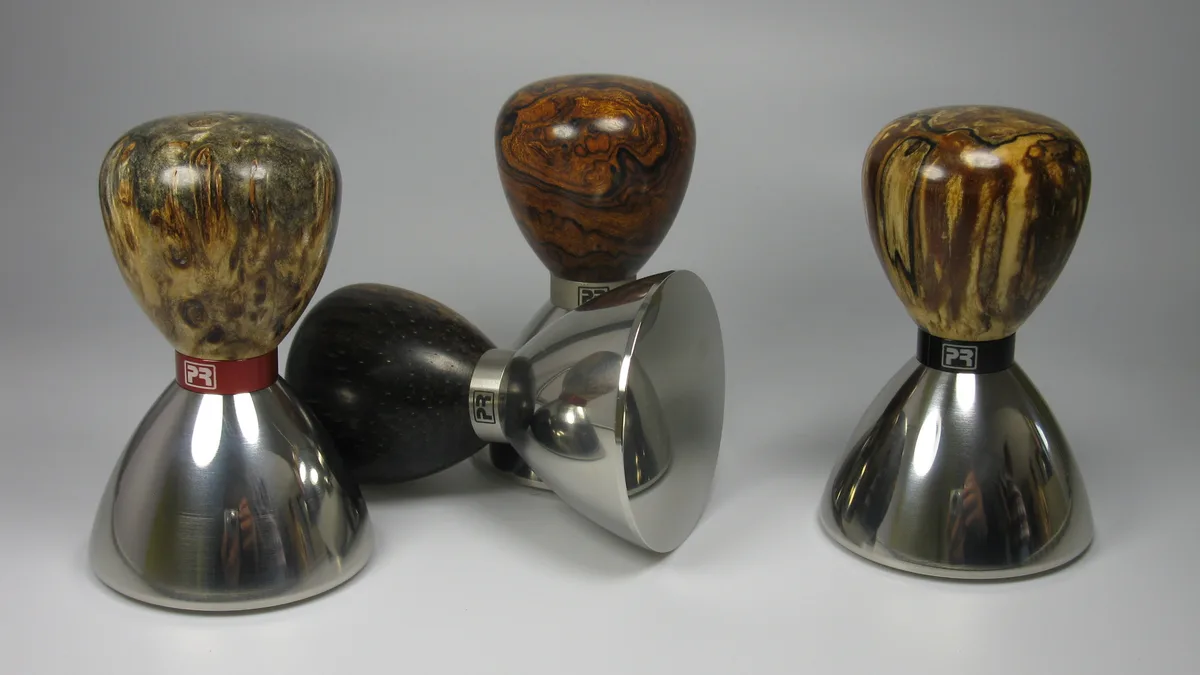
If you use a standard 58.0mm tamper in a 58.5mm precision basket, a 0.5mm uncompressed gap circles the entire perimeter of the puck. High-pressure water will bypass down the metal basket walls, causing severe perimeter channeling. Always pair precision baskets with edge-to-edge precision tampers (e.g., 58.5mm for commercial groups, or 53.3mm for Breville 54mm groups).
Step 4: Add a Reusable Stainless Steel Puck Screen
A 0.2mm to 1.7mm sintered stainless steel mesh screen placed on top of the tamped puck performs two critical functions: it diffuses the high-velocity jet coming from the group head shower screw into a gentle, uniform shower, and it prevents the puck surface from lifting and fracturing when pre-infusion pressure releases.
Step 5: Never Tap the Portafilter After Tamping
An old habit from commercial baristas is tapping the side of the portafilter with the tamper handle to knock loose grinds into the basket before a second tamp. Never do this. Tapping the portafilter fractures the compressed coffee puck along the basket walls, creating invisible structural faults that burst open into violent sprays the moment 9 bar of pressure hits the bed.
“High-speed strobe photography of bottomless extractions demonstrates that 90% of pinhole sprays originate not from bad grind sizing, but from post-tamp mechanical shock. Tapping the portafilter collar against the tamping stand unseats the perimeter seal, allowing water to slice down the basket side at over 30 miles per hour.” — Specialty Coffee Brewing Researcher
Official Manufacturer Documentation & Support
For factory-authorized schematic diagrams, replacement parts catalogs, and official warranty registration, consult the SCA Water Quality & Extraction Science Standards.
Frequently Asked Questions (FAQ)
Does a bottomless portafilter improve espresso flavor?
The portafilter itself does not change the flavor; it is simply a hollow metal ring holding the basket. However, it forces you to perfect your puck preparation. Once you eliminate channeling, your extractions become sweeter, more balanced, and completely free of harsh, astringent bitterness.
Why do my shots spray only with light roast coffee?
Light roasts are denser and contain less soluble cell wall degradation than dark roasts. They require finer grind settings to achieve proper extraction yields. Finer grounds create higher hydraulic resistance, meaning any minor void or clump in the bed experiences extreme pressure differentials, triggering high-velocity channeling.
What dose should I use in my bottomless basket?
Always respect the basket’s designated rating (e.g., 18g basket = 17.5g to 18.5g). Under-dosing leaves too much headspace between the puck and the shower screen, allowing water to pool and churn the bed surface. Over-dosing presses the dry puck against the shower screen screw, creating pre-brew fracture cracks.